
Trip Finder
Tibet Lhasa Tour with Namtso Lake, 7 Days (Private Trip)
Days: 7 /
Difficulty: 1 of 5 (Easy)
/
Min Group Size: 1 /
Max Group Size: 8
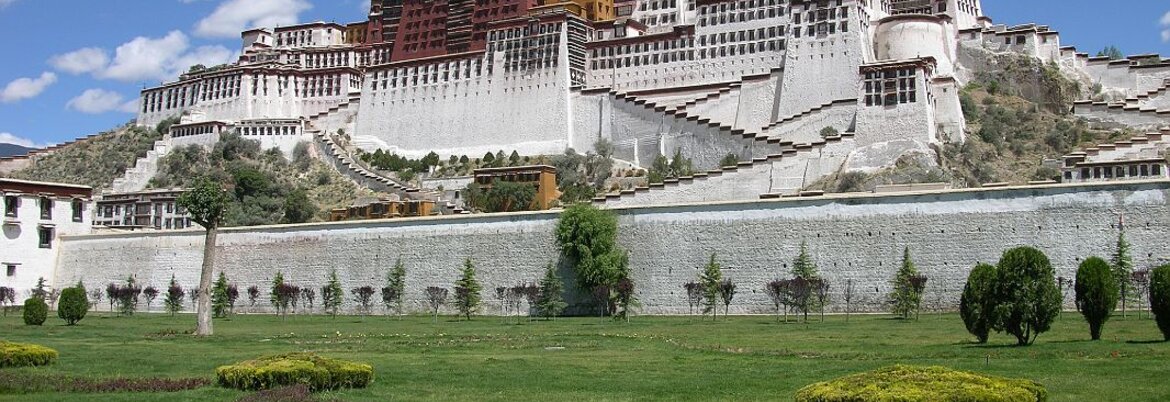
Lhasa is the capital city of Tibet Autonomous Region and has long been the center of politics, economy, culture and religion in Tibet. Lhasa means "holy land" in Tibetan language. Lhasa is one of the highest cities in the world. It is the birthplace of Tibetan Buddhism and contains many religious sites such as the Jokhang, Potala and Norbulingka palaces. The name Potala is possibly derived from Mount Potalaka, the mythological abode of Bodhisattva Avalokitesvara. The Jokhang Temple was also greatly expanded around this time. Although some wooden carvings and lintels of the Jokhang Temple date to the 7th century, the oldest of Lhasa's extant buildings, such as within the Potala Palace, the Jokhang and some of the monasteries and properties in the Old Quarter date to this second flowering in Lhasa's history. The Norbulingka summer palace and gardens to the southwest of the city were constructed in the 18th century under the 7th Dalai Lama. The 11th edition of Encyclopedia Britannica published between 1910—1911 noted the total population of Lhasa, including the lamas in the city and vicinity was about 30,000; a census in 1854 made the figure 42,000, but it is known to have greatly decreased since. Britannica noted that within Lhasa, there were about a total of 1,500 resident Tibetan laymen and about 5,500 Tibetan women. The permanent population also included Chinese families (about 2,000). The city's residents included people from Nepal and Ladak (about 800), and a few from Bhutan, Mongolia and other places. The Britannica noted with interest that the Chinese had a crowded burial-ground at Lhasa, tended carefully after their manner and that the Nepalese supplied mechanics and metal-workers at that time. The main gate to the city of Lhasa used to run through a large chorten and contained holy relics of the Buddha Mindukpa. With the invasion of China many people fled from the city; these included the living 14th Dalai Lama who fled from the Potala Palace into exile in India in 1959 after the Lhasa uprising. Between 1987—1989 Lhasa experienced major demonstrations, led by monks and nuns, against the Chinese Government's control of Tibet. As a result, the authorities imposed restrictions and political re-education programs in the monasteries. Many had to go through re-education sessions with the intent of having them align with the Communist views; they were also required to denounce both the Dalai Lama and Tibetan independence. Many monks and nuns who refused to cooperate were sent to prison, while others left the monasteries and escaped to India so that they could carry on with their studies.
Facts of the Trip
Similar Trips
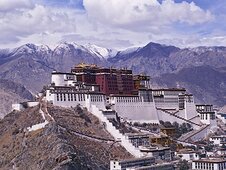
Tibet Lhasa Tour, 5 Days (Private Trip)
from USD 885 / Days: 5 / Difficulty: 1 of 5 (Easy)
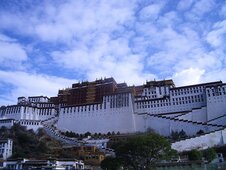
Tibet Lhasa Ebc Kailash Kathmandu Overland Tour, 14 Days (Private Or Group Trip)
from USD 2,850 / Days: 14 / Difficulty: 4 of 5 (Strenuous)
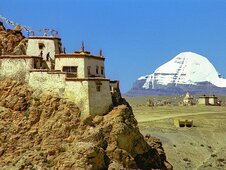
Kathmandu Mount Kailash Overland Tour, 10 Days (Private Or Group Trip)
from USD 2,275 / Days: 10 / Difficulty: 4 of 5 (Strenuous)
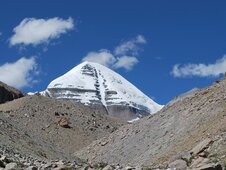
Humla-Limi Valley To Mount Kailash Trekking, 18 Days
from USD 3,600 / Days: 18 / Difficulty: 4 of 5 (Strenuous)
Itinerary
Day 1: Arrival in Lhasa (3650m)
Upon your arrival in Lhasa, our Tibetan guide will be greeting you at airport or train station with auspicious white Hada. Then you will be transferred to hotels in Lhasa. The guide will briefly introduce the itineraries and remind you about other dos and dont's for newcomers. To quickly get acclimatized to Tibetan plateau, it’s better to have a good rest in the hotel.
Meals: N/A
Accommodation: 3* Hotel
Day 2: Lhasa Tour - Potala Palace, Jokhang Temple, Barkhor Street
Our first stop is to visit the Potala Palace, the UNESCO world heritage site and the winter palace of the Dalai Lama. Walking slowly along the long stone steps to the White and Red Palaces, you can explore the former residence of Dalai Lama and his meeting room and religious chamber.You can see the gilded burial stupas of past Dalai Lamas and the meditation cave of the 33rd great king of Tibet.A bird's-eye view of Lhasa city and Lhasa valley from the top of Potala Palace will take your breath away. After we have lunch and then we will head to holy Jokhang Temple. It's the most sacred Buddhist site in Tibet. Outside the temple,you will witness pious Tibetan pilgrims,young and old, prostrating themselves in front of Jokhang and long lines of Tibetans following the Barkhor circuit. Inside, traveling in dim butter light, you can see the statue of Buddha Sakyamuni at the age of twelve,perhaps the single most venerated object in Tibet Buddhism. You may reach the top of Jokhang Temple to enjoy the panorama of old Lhasa city and great vista of Potala Palace. Then we may do the kora by circling the Barkhor Street with pilgrims and locals and buy some souvenirs. Never miss the chance to enjoy the tasty sweet tea in local tea house and visit Tromzikhang, the famous farm produce market.
Meals: Breakfast
Accommodation: 3* Hotel
Day 3: Lhasa Tour - Drepung Monastery and Sera Monastery
In the morning,you are going to visit Drepung Monastery which was one of the “Great Three” Gelug Monasteries of Tibet and was founded in 1416 by Jamyang Choge,one of the Tsongkhapa’s main disciples. Ganden palace is used as Dalai Lama’s palace in the Drepung before moving to the Potala Palace. In the afternoon, you will visit Sera Monastery which is another one of the “Great Three” Gelug Monasteries of Tibet and founded in 1419 by Jamchen Chojey, one of the Tsongkhapa’s main disciples. The highlight is the monks’ debate at around 3 - 5 in the afternoon.
Meals: Breakfast
Accommodation: 3* Hotel
Day 4: Lhasa to Ganden Monastery
Today we will drive to the Ganden Monastery, about 60 kilometers east of Lhasa and is one of the “Great Three” Gelugpa Monasteries of Tibet, founded by the Great Tsongkhapa in 1409. On the way you can enjoy the beautiful view of Kyichu River and as we drive up to Ganden along winding mountain road,tourists can see the far view of splendid monastery complex on the top of the mountain. Later we will visit chapels of Genden Monastery and the tomb of Tsongkhapa, the founder of Gelupa sect. After touring Ganden Monastery, we will head to visit Tibetan farmer's village nearby.
Optional: If physical condition is fine and weather allows, hike with guide around the Gaden Kora, enjoy the view of wide Kychi valley.
Meals: Breakfast
Accommodation: 3* Hotel
Day 5: Lhasa - Namtso Lake - Damxung
This is the day of holy Lake Namtso! In the morning, heading north from Lhasa, you’ll pass through the vast prairie in Damxung, where you can see the closest nomads area to Lhasa, with herds of yaks and sheep. Besides, you can also enjoy the view of the Qinghai-Tibet railway against the backdrop of snow-capped mountains. While crossing the snow-capped Nyenchen Thanglha Mountain Rainges, pause at the renowned Lagenla Pass (5190m) to marvel at the stunning vista of holy Namtso Lake from a distance. Descend the road to reach today’s destination, Namtso Lake, one of the ‘Three Holy Lakes’ in Tibet. Upon reaching the lake, you can enjoy your time doing a leisurely trek around Tashi Dor Island and along the lakeshore. For a panoramic view of Namtso Lake, climb to the top of the hill on Tashi Dor Island, where the circular lake resembles a boundless blue sea surrounded by snow-capped mountains. Marvel at the magical stone pillars and peaks, and explore meditation caves and Buddhist holy sites on the island with your travel guide. After visiting Namtso Lake, you will return to Damxung via the mountain pass.
Meals: Breakfast
Accommodation: 3* Hotel
Day 6: Damxung to Lhasa via Chimelong Nunnery and Tsurphu Monastery
After breakfast, you will first visit Chimelong Nunnery (Phyirmil Lung Nunnery), the largest nunnery near Lhasa. Roam over the peaceful nunnery and get an idea of different Buddhist studies in Tibet, you may also spot a sky burial site (Tibet funeral site) in the distance. Then, head to Tsurphu Monastery, the oldest monastery in Tibet. It is the seat of the Karmapa branch of the Kagyupa order of Tibetan Buddhism and is also the birthplace of the system of reincarnated living Buddhas in Tibet. Here, you can learn more about the ‘Black Hats', the Karma Kagyupa school of Tibetan Buddhism. At the end of the day, return to Lhasa.
Meals: Breakfast
Accommodation: 3* Hotel
Day 7: Departure from Lhasa to your next destination or by train to Mainland China
This is the last day of our tour and we have to get up very early for our transfer to Gonggar airport or train-station for your next destination in Mainland China.
Meals: Breakfast
Accommodation: N/A
# Tour Price on Group Size Basis - (Private Trip)
1PAX - USD 2135
2PAX - USD 1240 Per Person
3-4PAX - USD 1075 Per Person
5-6PAX - USD 1035 Per Person
Note:
3* category hotel: Gangyen Hotel in Lhasa.
Note: The package can be redesigned or redeveloped as per your taste. For more information please e-mail us at snftnepal@gmail.com or snftnepal@yahoo.de
Important: In case of emergency during the trip, Helicopter will be arranged by Swiss Himalayan Family Treks and Expedition Pvt. Ltd. The charges must be paid by the clients themselves.
| Dates | Pricing | Status * |
|---|---|---|
| Flexible / On request Book this Trip | Adult: USD 1,035 EUR 911 SFr 840 GBP 786 AUD 1.506 CAD 1.472 | Available on request |
* Dates can be flexible, please contact us for individual dates.
Our Tour Package Cost includes:
* Airport/Train-Station / Hotel / Airport/Train-Station pick up & transfer by private car/van.
* 5 nights accommodation in twin bed sharing room with breakfast at 3* Hotel in Lhasa and 1 night accommodation in twin bed sharing room with breakfast at 3* Hotel in Damxung.
* All Sightseeing Trip in Tibet and local monastery and entry fees.
* A local English speaking Tibetan guide.
* All land transportation by Car/Van/Bus during Tibet Tour.
* Tibet Travel Permit.
* Agency Service charge.
Our Tour Package Cost doesn't include:
* China Tourist Visa Fees and Tibet Group Visa Fees.
* Any meals (Lunch and Dinner) in Lhasa other than breakfast.
* Photographic charges in the monasteries.
* International Travel insurance.
* International air fare to and from Lhasa or Train Ticket to and from Lhasa.
* Emergency Evacuation (Helicopter Rescue).
* Any costs which arise due to a change of the itinerary, political disturbance, and strikes etc.
* Any other costs whatsoever, that is not mentioned in the cost included.
* Items and expenses of personal nature.
* Any kind of alcoholic drinks, cold drinks, snacks, laundry, phone call.
* Personal Trekking/Tour Equipment.
* Tips for guide, porters, driver...
Tipping is expected but it is not mandatory.