Mera Peak Climbing & Ambu Labthsa Pass Trek, Camping, 26 Days
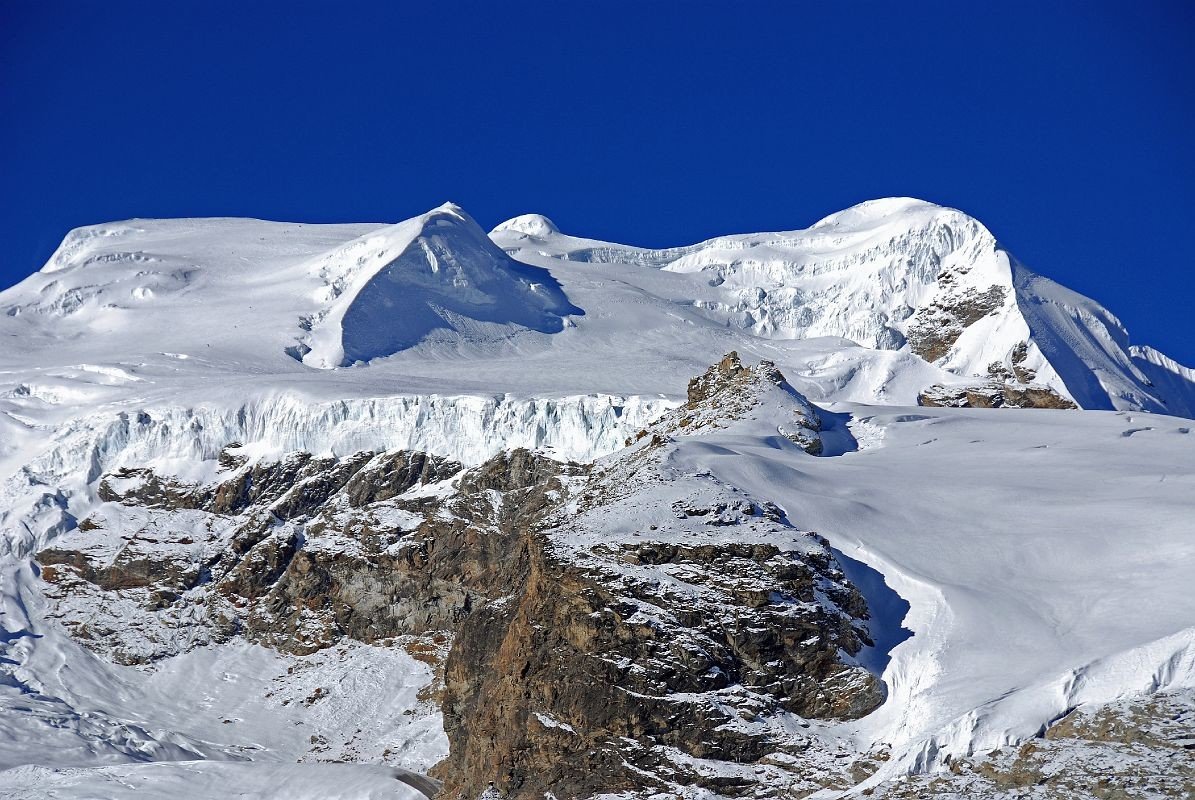
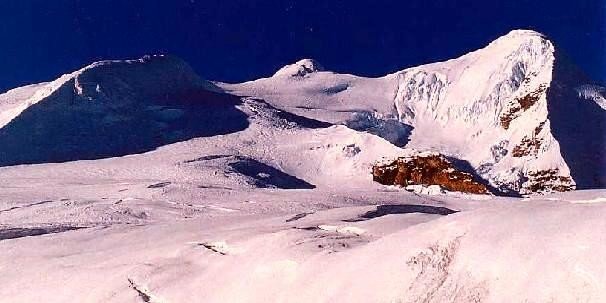
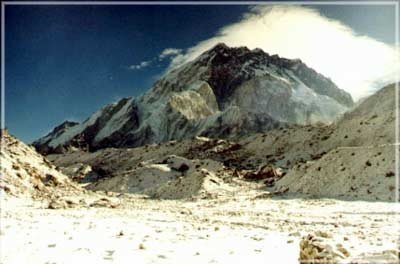
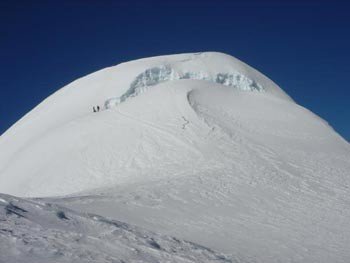
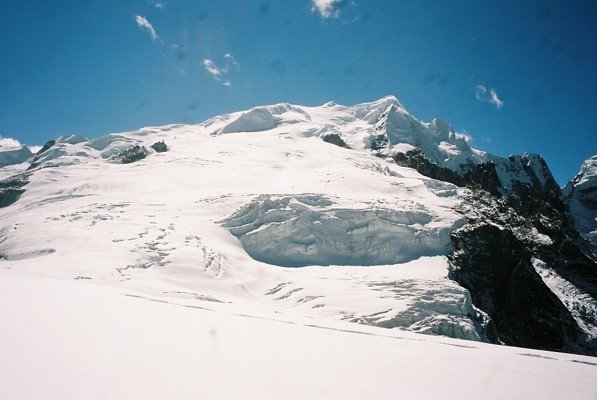
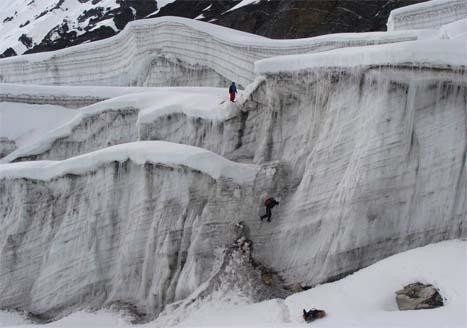
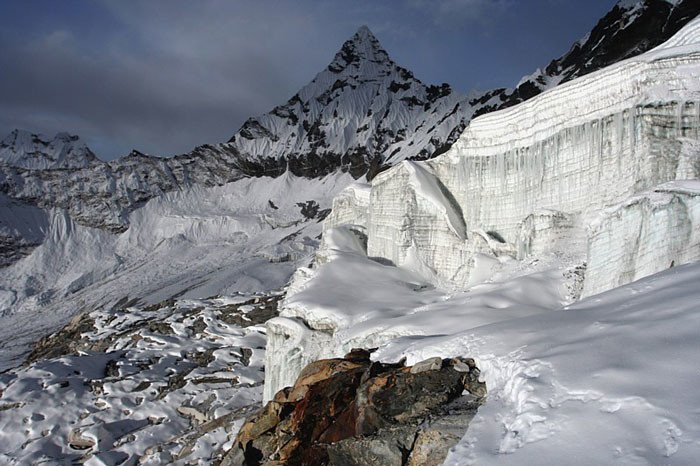
Mera Peak is situated in the Makalu Barun National Park on the edge of the Khumbu region. At 6476m it is the highest of the Nepal Trekking Peaks, and commands one of the best viewpoints in Nepal; there are panoramic views taking in, among others, Everest, Lohtse, Nuptse, Makalu, Cho Oyo, Kanchenjunga, Ama Dablam, Chamlang and Baruntse. However, Mera is technically easy to climb, attainable by non-climbers who are fit and who have an out-going sense of adventure, who are able to meet the challenges of trekking to significant altitude in the presence of a competent guide, supported by a team of porters. Climbers will need to make use of crampons to make the ascent, will carry a long ice axe for support, and will be roped to a guide across the glacier on summit day. First time users of these aids will be given instruction on their use below base camp. The ascent from the Mera La is gradual and sustained, before reaching a short, but straightforward climb up a 40 degree slope to Mera’s central summit. Note that the slightly higher North Summit is presently heavily crevassed and expeditions currently head for the Central Summit nearby (6461m).
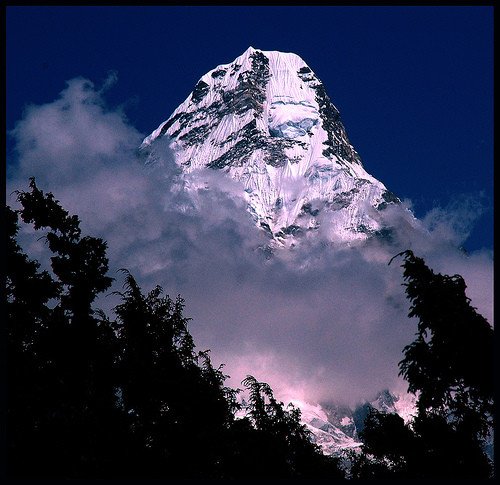
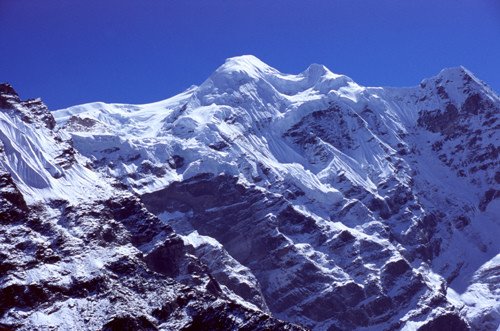
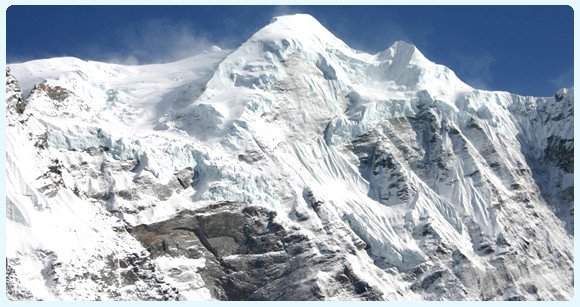
Honku Valley and the Amphu Lapcha Pass whereas most climbers who’ve climbed Mera retrace their steps back down the Inkhu valley, those proceeding to Amphu Lapcha (also referred to as the Amphu Labtsa) drop down into the uninhabited Honggu valley lying to the east. The upper Honggu is a true mountain wilderness where you are unlikely to meet many other trekkers, and the character of the terrain is markedly different to the Mera approach route. The valley is high and open, fringed with broad moraines and sharp white peaks, making this a place of bright light and changing color, and a wonderful place to camp. You’ll pass gleaming glacial lakes, and gain excellent views of Chamlang (7321m) and Baruntse (7220m). The precipitous crest of the Amphu Lapcha has to be one of the most dramatic crossings in the Himalaya – having ascended with the protection of fixed ropes over straightforward icefall, you emerge onto an airy promontory, with the ground simply sweeping away from your feet into the deep Imja Khola Valley – the vast wall of Lhotse, with Everest peaking over its left shoulder rears up on the opposite side, dwarfing the apparently diminutive Island Peak in the foreground. The descent requires a short abseil to a broad snow terrace. Although the pass is at a lower altitude than Mera Peak, it is trickier owing to steepness. However, as for Mera, non-climbers who are fit with an out-going sense of adventure can make this crossing easily. Once over the Amphu Lapcha, you enter the Sagarmatha National Park and the whole character of the terrain changes again. Your return to Lukla is via the Imja Khola and Dudh Koshi river valleys, along which the standard approach to Everest is made. You’ll enjoy classic views of the west side of Ama Dablam (6856m), and pass through interesting settlements such as Tengboche, which has a prominent monastery, and Namche Bazaar, which has an addictive buzz of excitement, whether heading up or heading down.
Outline itinerary
Day 1; Rendezvous at the group hotel in Kathmandu. Complimentary airport
transfers are provided. SNFT group package services begin with the
evening meal.
Day 2; A free day in Kathmandu. Optional guided sightseeing tour of the city's main
attractions, which include colourful Buddhist shrines and Hindu temples.
Overnight in Hotel.
Day 3; An early start for the dramatic flight through the mountains to Lukla(2840m).
We spend the remainder of the day resting and acclimatising. Overnight at tented Camp.
Day 4; A short and easy day of trekking off the beaten track, up through thinning
forest to the grazing area of Chutanga(3050m). Overnight at tented Camp.
Day 5; Acclimatisation day. We make a trek up to around 4000 metres giving views
over the Dudh Khosi Valley and across to the Atwra La pass. We return to
Chutanga. Overnight at tented Camp.
Day 6; A long day mostly uphill to cross the Zatrwa La(4600m) and descend to Tuli
Kharka a high pasture above the Hinku valley. Overnight at tented Camp (4320m).
Day 7; We follow a delightful descending trail across three ridges, before dropping
steeply down to the Hinku River and a final uphill to Gotay (3600m). Overnight at tented Camp.
Day 8; Following the west side of the Hinku River, we trek via the 'Yak herders'
summer settlement of Gondishung and its Buddhist shrine to
Tagnag (4350m). Overnight at tented Camp.
Day 9; A day for acclimatisation. We trek up above camp to around 5,000 metres
for views across to the Mera La and return to Tagnag. Overnight at tented Camp.
Day 10; A second acclimatisation day at Tagnag. Today is set aside for skills
training particularly the techniques required for fixed lines and crevasse
rescue. Overnight at tented Camp.
Day 11; We ascend an ablation valley beside the Dig Glacier to Kare, the
basecamp area for Mera Peak. Overnight at tented Camp (5000m).
Day 12; A day for further acclimatisation. We follow the ridge above camp to around
5500 metres and return to Khare. Overnight at tented Camp.
Day 13; Leaving our base camp we trek up onto the glacier and traverse to the
Mera La. We make camp 100 metres below the pass on the Hongu side.
Overnight at tented Camp (5300m).
Day 14; A rest and acclimatistion day prior to the ascent of Mera Peak. Overnight at tented Camp.
Day 15; We continue our ascent of the North flank of Mera Peak to a spectacular
eyrie nestled below a rocky outcropping on the ridge. Overnight at tented Camp (5800m).
Day 16; We make the technically easy ascent of Mera Peak(6476m). The summit
view includes 5 of the World's 6 highest mountains. Descend to the Hongu
Valley. Overnight at tented Camp (5200m).
Day 17; After descending to the Hongu River we trek up valley to a camp beside a
large frozen lake. Overnight at tented Camp (5000m).
Day 18; Passing beneath the giant west face of Chamlang we follow the Hongu
Khola and finally the Hongu Glacier to the holy site of Panch Pokhri(five
lakes). Overnight at tented Camp (5400).
Day 19; A rest day. The guides and Sherpas ascend the Amphu Laptsa to establish
fixed lines and prepare the pass for tomorrow's crossing. Overnight at tented Camp.
Day 20; Scree slopes and an icefall are tackled to gain the Amphu Labtsa(5700m).
We now descend fixed ropes to a lake below the pass and trek to
Chukung. Overnight at tented Camp (4730m).
Day 21; Descending the Imja Khola Valley via Dingboche we reach the main
Khumbu Valley and pass through the village of Pangboche to our halt at
Deboche. Overnight at tented Camp (3710m).
Day 22; Trekking via Thyangboche where we stop for a visit to the Monastery, and
via the settlements of Phunki Tenga and Kangjuma, we reach Namche
Bazaar. Overnight at tented Camp (3440m).
Day 23; A contingency day in case of bad weather or delay. We may use this day to
split the final day's trekking into two shorter days, or as a rest day in
Namche. Overnight at tented Camp.
Day 24; Our final days trekking following the Dudh Khosi mostly downhill but with a
last climb up to Lukla. We say goodbye to our support crew in traditional
style. Overnight at tented Camp.
Day 25; Taking a morning flight to Kathmandu, we will have plenty of time after
lunch for further sightseeing or shopping. Overnight in Hotel.
Day 26; SNFT group package services end after lunch. Complimentary airport
transfers are provided.
Our Tour Package Includes:
* Airport / Hotel / Airport pick up & transfer by car / Van / Bus.
* 4 nights accommodation with breakfast at Standard Hotel in Kathmandu.
* Kathmandu City Tours as per above program, inclusive of all entry fees, tour guide, car / van.
* Meals (breakfast, lunch and dinner) with Tea & coffee and hot water during the trek.
* Tented Camp accommodation during the camping and climbing period.
* 1 experienced, helpful and friendly guide, 1 cook and 1 helper, 1 sherpa (tents), porters
(1 porter between 2 people), their food, accommodation, salary, equipments and insurance.
* Round Trip flight from KTM/Lukla/KTM & Domestic airport taxes.
* Camping Equipments (Tents, Kitchen Utensils and Mattresses during the climbing period).
* First Aid Medical Kit.
* Sagarmatha National Park permit and necessary permits.
* Peak Permit, Garbage Deposit and Climbing Guide/Sherpa Equipments.
* Government taxes.
* Office Service charge.
Doesn't Include:
* Any meals in Kathmandu other than breakfast.
* Travel insurance.
* International air fare to and from Nepal.
* Nepal Tourist Visa fee. You may easily issue the visa upon your arrival at Tribhuwan International Airport - Kathmandu.
* International Airport tax.
* Emergency Evacuation.
* Items and expenses of personal nature.
* Any kind of alcoholic drinks, hot shower, cold drinks, snacks, laundry, phone call, internet.
* Personal Trekking Equipments (down sleeping bag and down jackets are available to hire or buy in Kathmandu).
* Tips for guide, porters, driver...
Tipping is expected but it is not mandatory.
NB: The Package can be redesigned or redeveloped as per your taste. For more information please e-mail us at snft@enet.com.np or snftnepal@yahoo.de
Note: Incase of emergency during the trip, Helicopter will be arranged by Swiss Nepal Family Trekking & Expedition (p)Ltd. The charges most be paid by the clients themselves.
Grade:
(Very Strenuous) [ Explain ]
USD
EUR
SFr
5,750.00
4,600.00
5,227.27
Trip Dates
| Start date | End date | Availability | Book it! |
| Trip is available | >> Book now |
TOUR CANCELLATION:
There will be a cancellation fee of 25% for any cancellation three weeks prior to Tour departure date, 50% two weeks prior to Tour departure date and no refund thereafter. No refund for no shows & delay arrivals whatsoever reason.